SSM Health undertook a large-scale content strategy and information architecture initiative to consolidate four independent websites into a single, unified digital experience. The project focused on creating a scalable site structure that simplified content management for internal teams while making it easier for patients, caregivers, and prospective employees to find the information they needed. Rather than migrating existing content into a new platform, the work reimagined how information should be organized, labeled, and connected to support real user tasks and journeys.

Prior to the redesign, SSM Health's digital ecosystem consisted of multiple independently managed websites, each serving a distinct audience and line of business. While the primary ssmhealth.com website functioned as the organization's main entry point, major brands, such as Cardinal Glennon Children's Hospital, Treffert Center, and SLUCare Physician Group, operated as separate domains with their own navigation systems, content structures, and editorial approaches. Although the main site linked to these organizations, moving between them often felt like leaving one website and entering another rather than continuing within a unified healthcare experience.
From an information architecture perspective, the separation created fragmented user journeys. Patients seeking specialized care frequently crossed organizational boundaries during a single task, yet each site introduced a new navigation model, different terminology, and inconsistent page structures. This required users to continually reorient themselves instead of building on a predictable navigation experience. Similar services and clinical information were often described differently depending on the site, making it difficult to compare offerings or understand how the organizations related to one another.
The distributed architecture also created significant challenges for content governance. With content managed across multiple domains, editorial standards, UX writing, metadata, and taxonomy evolved independently. Duplicate content, inconsistent labeling, and varying content models reduced overall consistency and increased the effort required to maintain accurate information. Opportunities to reuse content or establish shared governance practices were limited because each website functioned as its own ecosystem rather than as part of a cohesive digital platform.
While each site effectively represented its individual brand, the overall digital experience reflected the organization's internal structure rather than users' mental models. Patients are typically focused on finding the right provider, service, or location—not understanding which organizational entity owns the content. This highlighted the need for a unified information architecture that could consolidate the four domains into a single, scalable experience with consistent navigation, shared content patterns, and governance that supported both users and content teams.
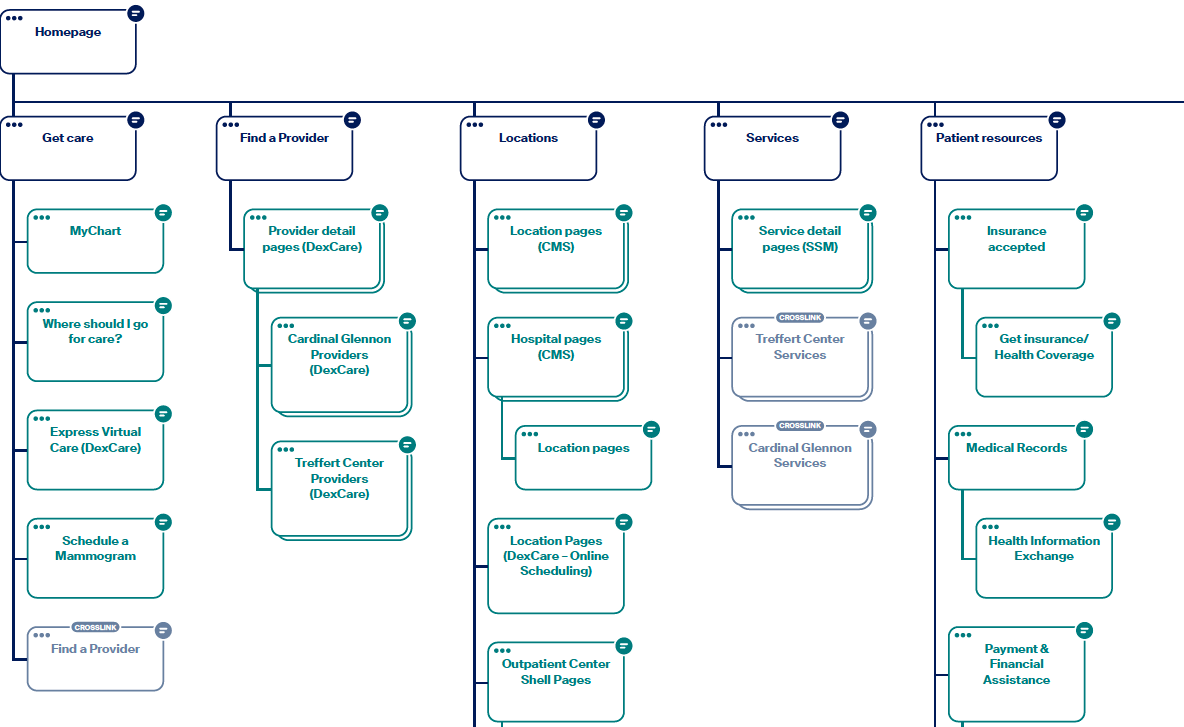
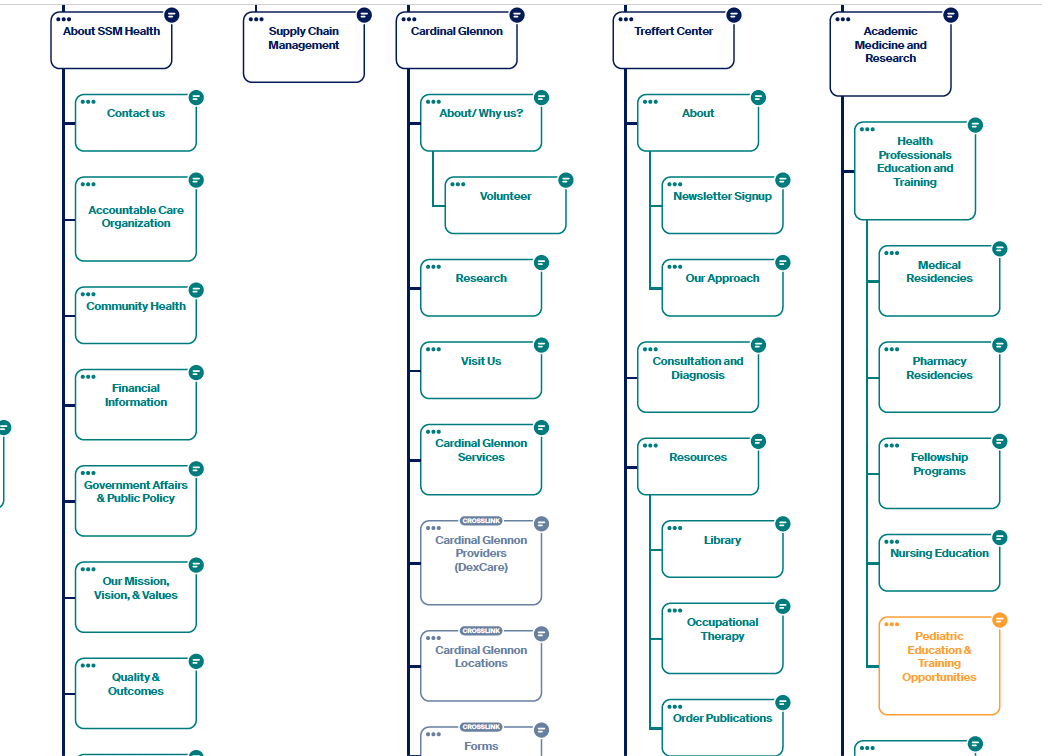
Developing a unified information architecture began with understanding how people actually used the existing websites rather than relying on the organization's current structure. Website analytics were analyzed to identify the most frequently visited content, common user journeys, search behaviour, and points where users abandoned tasks or moved between domains. This quantitative data was complemented by user research and stakeholder interviews, providing insight into how patients, caregivers, and internal teams expected information to be organized. Together, these inputs established a clear picture of user needs while also identifying opportunities to simplify navigation, reduce duplication, and create a more scalable content ecosystem.
A significant part of the project involved helping stakeholders shift away from thinking in terms of organizational ownership and individual websites. Many teams were accustomed to managing content within the boundaries of their own domain and viewed navigation through the lens of departments, brands, or business units. Through collaborative workshops and information architecture exercises, stakeholders were encouraged to focus instead on user goals and shared journeys that often crossed organizational boundaries. By grounding discussions in analytics, research findings, and evidence from users, the team was able to build consensus around a new, unified site structure that prioritized patient needs over internal silos. The result was an information architecture designed to support consistent UX writing, reusable content patterns, and a governance model that could scale across the entire SSM Health digital ecosystem.